An error occurred. Details Hide
You have unsaved pages. Restore Cancel

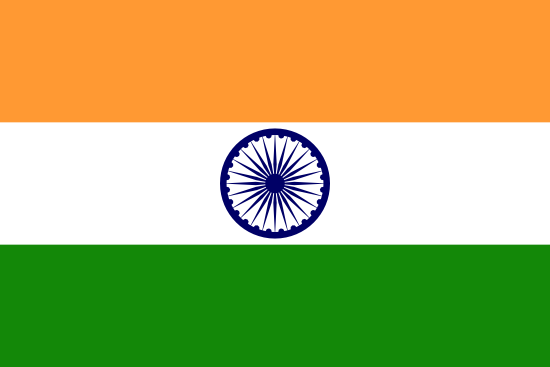
India

  • President:Ram Nath Kovind
  • Prime Minister:Narendra Modi
  • Capital city:New Delhi
  • Languages:Hindi 41%, Bengali 8.1%, Telugu 7.2%, Marathi 7%, Tamil 5.9%, Urdu 5%, Gujarati 4.5%, Kannada 3.7%, Malayalam 3.2%, Oriya 3.2%, Punjabi 2.8%, Assamese 1.3%, Maithili 1.2%, other 5.9% note: English enjoys the status of subsidiary official language but is the most important language for national, political, and commercial communication; Hindi is the most widely spoken language and primary tongue of 41% of the people; there are 14 other official languages: Bengali, Telugu, Marathi, Tamil, Urdu, Gujarati, Malayalam, Kannada, Oriya, Punjabi, Assamese, Kashmiri, Sindhi, and Sanskrit; Hindustani is a popular variant of Hindi/Urdu spoken widely throughout northern India but is not an official language (2001 census)
  • Government
  • National statistics office
  • Population, persons:1,339,180,127 (2017)
  • Area, sq km:2,973,190 (2017)
  • GDP per capita, US$:1,940 (2017)
  • GDP, billion current US$:2,597.5 (2017)
  • GINI index:35.1 (2011)
  • Ease of Doing Business rank:100 (2017)

All datasets: P
  • P
    • April 2018
      Source: World Bank
      Uploaded by: Knoema
      Accessed On: 24 April, 2018
      Select Dataset
      The World Bank periodically prepares poverty assessments of countries in which it has an active program, in close collaboration with national institutions, other development agencies, and civil society, including poor people's organizations. Assessments report the extent and causes of poverty and propose strategies to reduce it. Countries have varying definitions of poverty, and comparisons can be difficult. National poverty lines tend to have higher purchasing power in rich countries, where standards used are more generous than in poor countries. Poverty measures based on an international poverty line attempt to hold the real value of the poverty line constant across countries, including when making comparisons over time. Data here includes measures of population living below the national poverty line as well as the international poverty line. Also included are income distributions and urban and rural poverty

Our Privacy Statement & Cookie Policy

Our website uses cookies to improve your online experience. They were placed on your computer when you launched this website. You can change your personal cookie settings through your internet browser settings.

Privacy Policy